Incoterms Made Simple: 5 Essential Terms Every Iranian Trader Should Know
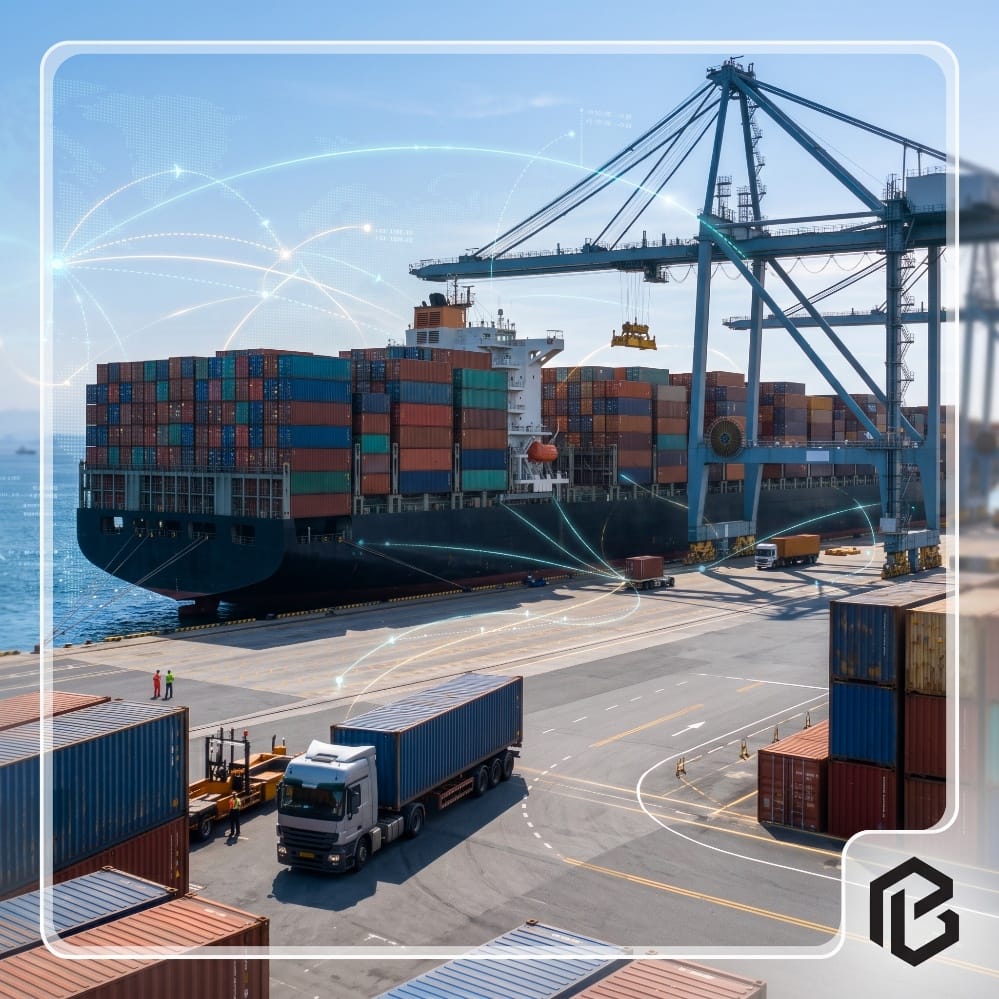
One of the biggest challenges for traders at the start of international commerce is agreeing on questions such as "Who pays the freight?", "Who bears the loss if the goods sink at sea?" and "Who is responsible for formalities and customs duties?"
To settle these disputes, the International Chamber of Commerce (ICC) developed a set of unified rules called Incoterms (International Commercial Terms). These rules draw the exact line between the buyer's and the seller's costs and risks. According to Wikipedia, Incoterms cover matters such as carriage of goods, export and import clearance, and the transfer of risk.
Although Incoterms 2020 defines 11 rules, mastering the 5 most commonly used terms is enough for importers and exporters in Iran to avoid large currency and legal losses.
1. Ex Works (EXW)
"Maximum obligation for the buyer, minimum responsibility for the seller"
Under EXW, the seller only has to make the goods available at its factory, warehouse or workshop. From the moment the goods are placed at the buyer's disposal, all responsibilities (loading onto the truck, export clearance in the country of origin, carriage to the port, insurance, international freight and import clearance at destination) rest with the buyer.
- Mode of transport: Suitable for all modes (road, air, sea, rail and multimodal).
- Common use in Iran: Buying from Chinese factories or European manufacturers that lack the expertise or licence to export directly to Iran.
- Critical note for Iranian traders: If you do not have a trusted agent or freight forwarder in the country of origin who can handle export clearance, never choose EXW.
2. Free On Board (FOB)
"The most popular and recommended term for sea imports to Iran"
Under FOB, the seller is responsible for delivering the goods to the port of origin, completing all export customs formalities and loading the goods on board the named vessel. Risk and cost transfer at the exact moment the goods are on board. After that, sea freight and the risks of the voyage are the buyer's.
- Mode of transport: Sea and inland waterway transport only.
- Common use in Iran: Purchase contracts from Chinese ports (such as Ningbo and Shanghai) and Jebel Ali in the UAE to Iranian ports (such as Shahid Rajaee or Bushehr).
- Big advantage for Iranian traders: With FOB you can choose the shipping line and forwarder yourself. This lets you control freight rates, obtain clearance documents faster and coordinate currency payments more easily.
3. Free Carrier (FCA)
"The modern, standard alternative to FOB for containers and air freight"
In many modern purchases, goods are delivered in containers to container yards (CY) or airports rather than directly on board a vessel. Under FCA, after export clearance the seller hands the goods to the buyer's nominated carrier at an agreed point (such as a cargo warehouse, airport or rail/road terminal).
- Mode of transport: All modes (especially air and land).
- Common use in Iran: Overland imports from Turkey; air imports of spare parts and medical goods from Dubai, Europe and China.
- Difference from EXW: Under FCA the seller handles export customs clearance, so the origin clearance risk is lifted from the buyer.
4. Cost and Freight (CFR)
"Freight with the seller, risk with the buyer"
Under CFR, in addition to export clearance, the seller pays the freight to the agreed destination port (for example, Bandar Abbas). However, the point where risk transfers is still at the port of origin, as soon as the goods are loaded on the ship. If the cargo is damaged or lost at sea, the financial liability falls on the buyer.
- Mode of transport: Sea transport only.
- Common use in Iran: Imports of bulk goods and industrial raw materials where the foreign seller has favourable volume contracts with shipping lines.
- Important warning: Because the seller has no obligation to insure the cargo, the Iranian buyer must arrange cargo insurance before the vessel sails.
5. Cost, Insurance and Freight (CIF)
"CFR plus basic insurance cover provided by the seller"
Under CIF, the seller pays the freight to the destination port and must also insure the goods for the buyer's benefit (at least minimum cover under Institute Cargo Clauses C). Risk transfers exactly as in CFR at the port of origin, but if damage occurs en route, the buyer can claim compensation from the insurer.
- Mode of transport: Sea transport only.
- A very sensitive point in Iranian trade: Under the rules of the Central Insurance of Iran and the Central Bank's foreign-exchange regulations, imported goods with a bank order registration usually must be insured with domestic insurers. CIF may therefore lead to a requirement to buy a second, domestic policy during currency allocation and customs clearance. For this reason, most Iranian traders prefer to buy on FOB or CFR terms and arrange cargo insurance inside Iran.
Comparison Table of the 5 Key Incoterms
| Term | Description | Origin clearance | Main freight | Insurance | Risk transfer point |
|---|---|---|---|---|---|
| EXW | Ex Works | Buyer | Buyer | Buyer | Seller's warehouse / factory |
| FCA | Free Carrier | Seller | Buyer | Buyer | Handover to carrier at origin |
| FOB | Free On Board | Seller | Buyer | Buyer | On board the vessel at the port of origin |
| CFR | Cost and Freight | Seller | Seller | Buyer | On board the vessel at the port of origin |
| CIF | Cost, Insurance and Freight | Seller | Seller | Seller (basic) | On board the vessel at the port of origin |
Three Key Tips for Iranian Traders
- Always state the exact version and place: Always write in the proforma invoice and contract: [chosen rule] + [exact port or place] + Incoterms 2020. Example: FOB Shanghai Port, Incoterms 2020
- Consider the currency rules of the Comprehensive Trade System: The term chosen in the proforma directly affects the customs value (CIF value of the goods), the basis for import duties and the currency allocation fee.
- Beware of the DDP term: Under DDP (Delivered Duty Paid), the foreign seller must clear the goods at the destination customs. Given order-registration rules and administrative restrictions in Iran, DDP is almost impossible for foreign companies to accept and should not be agreed.