Challenges of Exporting Goods from Iran and How to Overcome Them: A Complete Practical Guide
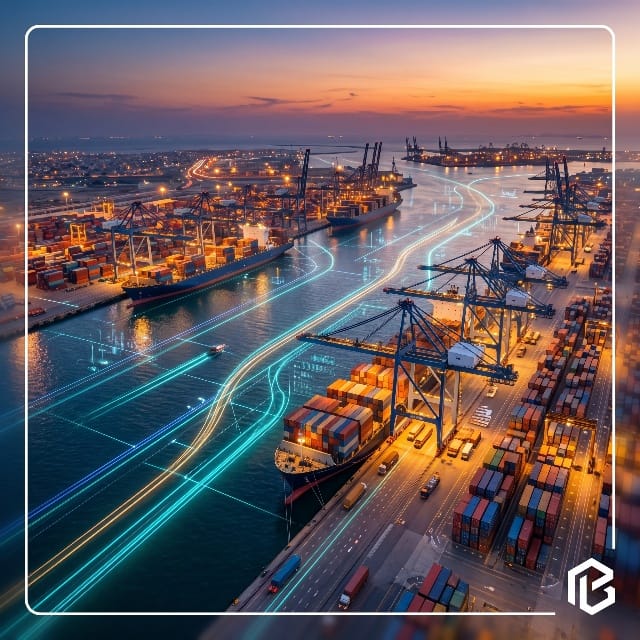
Non-oil exports have always been one of the main pillars of Iran's economic resilience and foreign-currency earnings. Even so, the path from Iranian production sites to international markets is full of complexity, bureaucratic friction and structural obstacles. An analysis of foreign trade shows that success for traders and manufacturers in the current environment requires precisely identifying currency, banking and logistics bottlenecks, and adopting new international marketing strategies.
1. The Most Important Challenges of Exporting Goods from Iran
Based on data from chambers of commerce and economic reports, the obstacles facing exporters can be grouped into two broad categories: "domestic and policy-making challenges" and "international and operational challenges":
A) Currency repatriation and unstable foreign-exchange policies
The biggest concern of economic actors in recent years has been the repatriation of export earnings and administered pricing:
- The gap between the NIMA rate and the free-market rate: Imposing fixed rates on exporters and requiring currency to be settled at a rate below real production costs in the free market has squeezed exporters' profit margins to a minimum. According to analytical reports published in Donya-e-Eqtesad on the challenges of Iran's foreign trade, a significant part of the problems stems from mistaken currency policies and domestic self-sanctioning.
- Opposition from the private sector and executive bodies: The repatriation requirement, together with complex rules on settling obligations, has reduced the willingness to export officially and eroded the competitive advantage of products such as pistachios and saffron, an issue also stressed in numerous reports, including coverage of positions on the repatriation problem by ISNA.
B) Banking and financial bottlenecks and the effects of sanctions
- No access to the global banking network (SWIFT): Sanctions-related restrictions and FATF-related obstacles have made receiving export proceeds through official banking channels impossible or very risky.
- Fees and risks of intermediary companies and exchange houses: Reliance on trust-company and exchange-house networks, besides raising transaction costs by 5 to 15 percent, carries the risks of frozen funds or long delays in financial settlement.
C) Logistics obsolescence and high supply-chain costs
According to assessments by specialised commissions of the Khorasan Razavi Chamber of Commerce on exporters' logistics challenges, goods transit costs put extra pressure on firms' competitiveness:
- A shortage of refrigerated containers for perishable agricultural and food products.
- An ageing road transport fleet and limited capacity of rail lines connected to the borders.
- Exorbitant demurrage costs (waiting of ships and wagons) and a shortage of direct shipping lines to distant markets.
D) Reliance on raw-material exports and traditional trade structures
- A high share of raw and semi-raw materials: More than 60 to 65 percent of the total value of the country's non-oil exports consists of raw materials, primary petrochemicals and mineral derivatives, and the average value per tonne of Iranian exports is about 350 to 380 dollars, while for downstream products this figure can exceed 2,000 dollars per tonne.
- Neglect of market research: Relying solely on the advantage of cheap energy or labour has led to neglect of branding, packaging suited to the target market's culture and up-to-date international standards.
- Strong geographic concentration: Most of Iran's non-oil exports are limited to a small number of countries (such as China, Iraq, the UAE, Turkey, Afghanistan and India). Changes in import policy or higher standards in these countries (such as the Iraqi market) immediately challenge Iranian traders' share.
E) Sudden circulars and frequent changes in regulations
Improvised export duties or overnight export bans to regulate the domestic market have seriously damaged foreign buyers' trust and pushed target markets toward regional competitors such as Turkey, India and Pakistan.
2. Solutions for Overcoming the Challenges and Boosting Exports
To overcome these obstacles, coordinated action is needed at two levels: "macroeconomic policy-making" and "firms and exporters."
1. Use the capacity of Export Management Companies (EMC) and consortia
One reason for the success of leading economies is handing the commercial operations of small and medium enterprises (SMEs) over to export management companies:
- With deep knowledge of commercial law, customs standards and consumer tastes in the target market, these companies reduce marketing and market-research costs for manufacturing units.
- Forming export consortia enables consolidated shipments, lower transport costs and stable supply of high-volume orders.
2. Make maximum use of regional agreements and preferential tariffs
Instead of settling for general memoranda of understanding, operational focus should be on mechanisms with direct tariff benefits:
- Free trade agreement with the Eurasian Economic Union (EAEU): Benefit from zero tariffs on thousands of product lines for sustainable entry into the markets of Russia, Kazakhstan, Belarus, Armenia and Kyrgyzstan.
- The capacity of the Shanghai Cooperation Organisation and BRICS: Focus on bilateral financial settlement channels (monetary agreements based on local currencies) to reduce dependence on the dollar and Western financial systems.
3. Use re-export hubs
- Smart use of countries such as Oman and the United Arab Emirates as centres for processing, repackaging and re-exporting goods is an effective way to connect to African, East Asian and European markets away from direct sanctions risks.
4. Diversify the product basket and avoid negative price competition
- Moving from a "cost leadership based on cheap, low-quality goods" strategy toward "differentiation, quality and after-sales service."
- Shifting investment from raw-material exports to downstream chains, such as agricultural processing industries, specialised petrochemicals, pharmaceuticals and knowledge-based goods.
5. Reform the currency settlement model and systematic barter
- Developing import-against-export mechanisms for the exporter or others, so that the exporter can supply its currency at the agreed real rate to authorised importers of machinery and raw materials and be protected from losses caused by administered rates.
3. Comparison Table: Traditional vs. Desirable Export Model
| Indicator | Traditional Iranian export model | Proposed modern model |
|---|---|---|
| Product basket | Mostly raw and semi-raw materials with low added value | Processed, knowledge-based and downstream-chain products |
| Marketing | Passive and reliant on ad hoc foreign buyer demand | Professional market research, data-driven marketing and branding |
| Export executor | Independent industrial units with limited commercial knowledge | Specialised export management companies (EMC) and consortia |
| Settlement method | Traditional exchange houses, high costs and administered currency obligation | Organised barter, negotiated currency settlement and regional hubs |
| Logistics | Scattered, without integrated planning and with an ageing fleet | Long-term third-party logistics (3PL) contracts and a modern container fleet |